
India's gain will be an additional business of $300 million to $400 million per month if 10-11% of Bangladesh's export is diverted to Indian hubs like Tiruppur.

Automobile (auto) retail sales in India grew by an impressive 14 per cent in July compared to the same period last year, driven by a surge in the rural economy, good product availability, and product launches. While passenger vehicles (PVs) saw a 10 per cent increase during this period, inventory levels have surged to a historic high of 67-72 days in PVs, equating to Rs 73,000 crore worth of stock, according to the Federation of Automobile Dealers Associations (Fada). This poses a risk to dealer sustainability. Inventory levels in July 2023 were only 50-55 days, equating to a stock worth Rs 49,833 crore. In June 2024, inventory was between 62 and 67 days, with a stock value of Rs 60,000 crore.
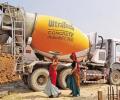
UltraTech Cement's announcement that it would snap up a controlling stake in India Cements may only be a sign of more to come. In the wake of one of the country's most expensive deals in recent times, cement majors may slug it out to add smaller firms from the region to their portfolio. UltraTech's buy is the latest in the four deals the southern market has seen in less than a year, with Adani Cement being the other buyer.

'The overwhelming evidence from various studies and reports indicates that the current work culture in the IT sector, characterised by excessive hours, has severe consequences for health, productivity, and overall quality of life.'

While praising the internship scheme announced in the Budget, India Inc wants clarity on how it will be implemented. The scheme is expected to help companies address the skill gap in employment. Dheeraj Hinduja, chairman, auto major Ashok Leyland, said: "We had started an internship programme at our plant in Pantnagar, which we established in 2010 with colleges there.

Recognising job creation for the youth as the foremost challenge for the economy, Finance Minister Nirmala Sitharaman on Tuesday announced a comprehensive Prime Minister's package to facilitate the employment and skilling of 41 million youth with a central outlay of Rs 2 trillion over the next five-year period. The package will consist of five schemes and initiatives - three focused on jobs and two on skilling.

If you see 'Made in India' apparel at any of the IOC's retail channels, it may have well come from Tiruppur, manufactured by a firm, which is owned by a mother-daughter duo, called Back Bay India.

'Bilateral trade has suffered seriously because of the growing unrest.' 'There is a standstill on both sides amid the curfew.'

The scare of communicable diseases seems to be gripping the country with Maharashtra reporting 28 Zika cases this year, the highest since 2021.

'This year overall hiring has seen a slight improvement as compared to the dip seen during the last financial year.'

Kerala has had 202 fatalities in 2024 so far. In July alone, there were 202,122 episodes of fever, 2,250 cases of dengue, 1,850 cases of mumps and several other illnesses. 10,000 cases of dengue have been reported from Karnataka. 1,000 swine flu cases have been documented in Rajasthan.
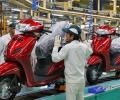
The battle for the top spot in the two-wheeler market is intensifying. The gap between Hero MotoCorp and Honda Motorcycle & Scooter India (HMSI) in retail sales narrowed to just 45,607 units in June. This improvement comes as HMSI has clawed back market share after dipping to a historic low of 18 per cent in May 2023. Now, the retail market shares of the two companies are 28.86 per cent and 25.54 per cent, respectively, compared to 35.54 per cent and 18.05 per cent in May 2023.

Priyanka's victory seems assured, but the broader implications for Kerala's political landscape and South Indian politics remain to be seen.

'There is no immediate threat to the government, and they would prefer the growth agenda.'
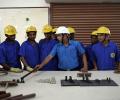
Severe skilled, unskilled shortage threatens to pull emergency brakes on India's industrial engine.
Updated new base years for national accounts and other macro-indicators are expected to come into effect from January-February 2026, coinciding with the first and second advance estimates of national income for FY26, senior official sources aware of the development told Business Standard. "The statistics ministry set up the Advisory Committee on National Accounts Statistics (ACNAS) earlier this week. "It will advise on the base year for GDP (gross domestic product) and its alignment with other macro-indicators.

Passenger vehicle sales are expected to experience muted growth in the current financial year.

'Corporations that were recruiting 15 or 20 [students] have reduced the number to two or three.'


A company spokesperson told Business Standard that Amazon was committed to the safety and well-being of its employees. "Disciplinary proceedings have been initiated against the people involved in the incident. "The process is underway and we are looking at a potential case of 'separation' for the people involved within the next week or two," the spokesperson added.
